How High Fuel-Water Separator Contamination Damages Common Rail Diesel Injection Systems
Water is one of the most damaging contaminants that can enter a diesel fuel system—especially in today’s high-pressure common rail (HPCR) engines.
If your fuel-water separator warning light comes on, it means the system’s water-in-fuel sensor has detected accumulated water at the separator. Don’t ignore it. Water contamination can reduce fuel lubricity, promote corrosion, damage injectors and fuel pumps, and contribute to expensive downtime.
For owner-operators and fleets, heavy-duty fuel-water separator filter replacement is a relatively small maintenance expense compared with repairing a contaminated high-pressure fuel system.
The Intolerance of Modern HPCR Fuel Systems to Liquid Impurities
Modern diesel engines are remarkably precise. High-pressure common rail systems operate with extremely tight clearances and very high injection pressures. That precision helps deliver the fuel efficiency, power and emissions performance expected from today’s heavy-duty engines—but it also means contamination can have serious consequences.
Water is particularly troublesome.
Unlike diesel fuel, water provides essentially no lubricating protection for fuel-system components. It can also promote corrosion and, when combined with other contaminants, contribute to abrasive wear and component damage.
The Mechanics of a Heavy-Duty Fuel-Water Separator Filter Assembly
A primary fuel filter, often called a fuel-water separator, is designed to perform two important jobs:
- Remove water from diesel fuel.
- Capture particulate contamination before it reaches downstream fuel-system components.
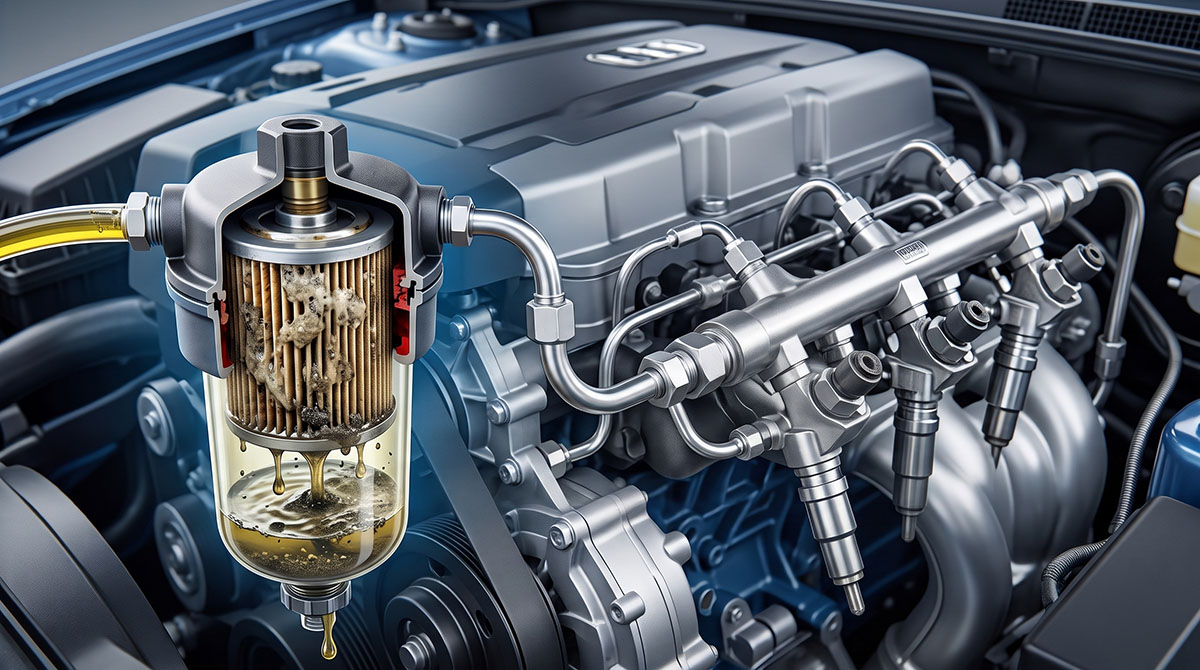
The exact design varies by engine and application, but many heavy-duty systems use a combination of filter media, water-separating or coalescing elements, a water collection bowl and a water-in-fuel sensor.
How water separation works
As contaminated fuel passes through the separator, the filtration media captures particulate matter while water droplets are separated from the fuel. In a coalescing system, smaller water droplets are brought together into larger droplets that can fall into the collection bowl.
A water-stripping element or hydrophobic barrier can provide another layer of protection by preventing separated water from continuing downstream.
Modern filtration technologies may use several stages to improve water separation.
The important point for drivers and fleet managers is simple: The separator can only protect the fuel system if the filter element is functioning properly and the accumulated water is removed.
What Happens Inside a Diesel Engine When Water Bypasses the Primary Element?
Once water makes it past the primary filtration stage, it can travel farther into the fuel system.
That puts the transfer pump, high-pressure pump and injectors at risk.
Corrosion, Injector Damage and Fuel Pump Cavitation
Water can attack metal surfaces within the fuel system and contribute to corrosion, rust and pitting. In an HPCR system, even relatively small changes to highly precise surfaces can affect component performance.
Water contamination can also reduce the lubricity available to fuel-system components. That matters because the fuel itself helps lubricate components within many diesel fuel systems.
The potential consequences include:
- Injector wear and sticking
- Injector nozzle damage
- Corrosion and pitting
- Reduced fuel-system component life
- Fuel pump wear
- Loss of fuel-system performance
- Unstable or poor engine operation
- Increased risk of unplanned downtime
What about fuel injector galling?
Fuel injector galling is a serious mechanical failure mode associated with abnormal wear and inadequate lubrication between closely fitted components.
Water contamination can contribute to the conditions that accelerate fuel-system wear, but galling should not automatically be diagnosed simply because water is present in the fuel. A proper diagnosis should consider fuel quality, filtration, lubrication, contamination levels, operating conditions and the condition of the affected components.
The same principle applies to fuel pump cavitation: unusual pump noise, pressure problems or fuel delivery issues require proper diagnostics rather than assuming water contamination is the sole cause.
In other words, contaminated fuel is a warning sign—not a complete diagnosis.
Don’t Forget Microbial Growth and Bio-Sludge
Water in diesel fuel can create another problem that is easy to overlook: microbial growth.
Bacteria and fungi can live at the fuel-water interface and feed on hydrocarbons. Their growth and by-products can contribute to corrosive contamination and rapidly plug filters.
This is sometimes referred to as diesel fuel bug.
If you find a separator containing dark, slimy material or unusual sludge, don’t simply replace the filter and assume the problem is solved. The fuel tank and fuel supply should also be investigated for an underlying contamination problem.
Signs Your Truck’s Primary Fuel Filter is Completely Saturated
A fuel filter doesn’t always announce that it’s nearing the end of its service life with a convenient dashboard message.
Watch for changes in how the truck starts, idles and accelerates.
Potential warning signs include:
- A water-in-fuel warning light
- Engine hesitation or surging
- Hard starting
- Reduced power
- Poor acceleration
- Rough running
- Unexpected engine derating
- Increased fuel-system restriction
- A filter that is visibly contaminated or heavily loaded
- Repeated water accumulation in the separator bowl
Engine hesitation diagnostics: start with the fuel supply
If a truck suddenly develops hesitation, don’t immediately assume the injectors are failing.
Fuel restriction and contamination should be part of the diagnostic process.
A restricted primary or secondary filter can reduce fuel delivery. Water contamination, air entering the fuel system, microbial growth or degraded fuel can create similar symptoms.
The primary fuel filter is typically located on the suction side of the fuel pump and is designed to provide water separation while maintaining relatively low restriction. The secondary filter provides finer particulate filtration farther downstream.
That means checking the fuel filtration system early in the diagnostic process can save time and prevent unnecessary parts replacement.
Service Interval Guidelines: Draining the Bowl vs. Complete Filter Element Replacements
There are two different maintenance tasks that are sometimes confused:
Draining accumulated water and replacing the filter element are not the same thing.
Draining the separator bowl
If your truck is equipped with a serviceable water separator and drain bowl, follow the truck manufacturer’s inspection and maintenance instructions.
As part of a pre-trip inspection, drivers should look for evidence of water accumulation or a water-in-fuel warning. In applications and equipment where the manufacturer provides for manual draining, accumulated water should be drained according to those instructions.
Daily attention is particularly worthwhile when trucks operate in conditions that increase condensation risk, such as significant temperature swings or high humidity.
Always follow the OEM’s specific procedure for draining the separator. Fuel handling and disposal should also comply with applicable environmental requirements.
Replacing the filter element
Draining water doesn’t restore a saturated, restricted or contaminated filter element.
The filter should be replaced according to the engine manufacturer’s maintenance schedule and sooner if inspection or diagnostics indicate contamination, restriction or filter plugging.
A filter’s micron rating and efficiency also matter. Primary fuel filters and secondary filters perform different jobs. For example, primary fuel filtration commonly operates around the 10–30 micron range, while secondary filtration is designed for much finer particulate capture, with nominal efficiencies in the 4–10 micron range.
Those numbers are not universal specifications for every truck. Always use the filter and performance specifications approved for your particular engine and fuel system.
When should you replace a heavy-duty fuel-water separator?
Don’t wait for a truck to experience a major performance problem before thinking about filtration.
Consider replacement when:
- The manufacturer’s scheduled service interval has been reached.
- The filter is visibly contaminated.
- Water accumulation is recurring.
- The filter shows signs of plugging or excessive restriction.
- Fuel contamination has been confirmed.
- Microbial contamination has been identified.
- Fuel-system diagnostics indicate a filtration problem.
The Technology & Maintenance Council (TMC) maintains recommended practices specifically addressing fuel filtration and water-separating devices, including RP 317C, Fuel Filtration and Water Separating Devices, and RP 339B, Maintaining Fuel/Water Separators.
TMC’s Recommended Practices are voluntary industry practices developed to help commercial vehicle operators maintain equipment effectively.
Why Filter Quality Matters
Not all filtration products provide the same level of protection.
When choosing a replacement filter, look beyond whether the part physically fits the housing. The correct filtration performance, micron rating, water-separation capability, flow characteristics and compatibility with the engine’s fuel system all matter.
An inexpensive filter that does not provide the required protection can become an expensive decision if contamination reaches the HPCR system.
For heavy-duty applications, filtration should be viewed as component protection, not simply a consumable maintenance expense.
The Bottom Line: Keep Water Out of Your Fuel System
Today’s HPCR diesel engines depend on exceptionally clean fuel.
A properly maintained fuel-water separator helps keep water and contaminants away from the high-pressure pump and injectors. Regular inspections, appropriate water draining and timely filter replacement can help identify contamination before it becomes an expensive fuel-system repair.
If your water-in-fuel warning light is illuminated, your truck is experiencing hesitation, or you’re due for a heavy-duty fuel-water separator filter replacement, don’t ignore it.
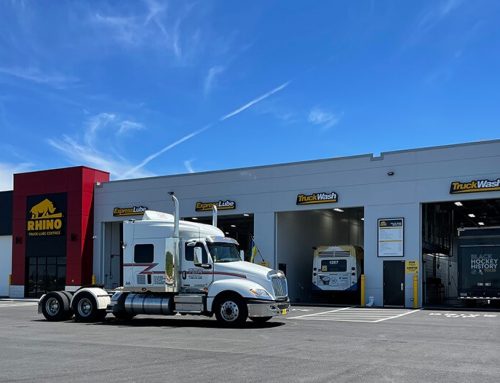
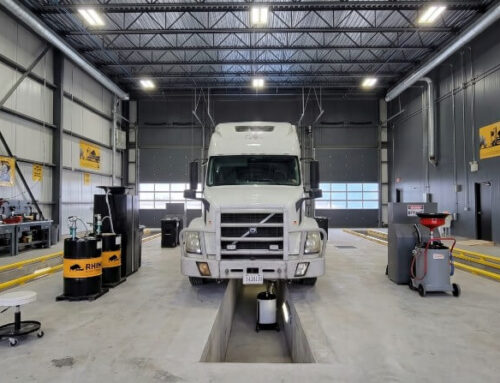
Protect your engine’s high-pressure injection assets. Stop by Rhino Truck Lube Centres for premium heavy-duty fuel and filtration service.
Our team can help inspect your filtration system, identify potential contamination issues and keep your truck’s preventive maintenance on schedule.
Frequently Asked Questions
Need heavy-duty fuel filtration service?
Don’t wait for a contaminated fuel system to become a major repair.
Stop by Rhino Truck Lube Centres in Moncton, NB, or Dartmouth, NS, for premium heavy-duty fuel and filtration service, and keep your truck moving.