Reducing Fleet Dwell Time: Fast-Lube Express Bays vs. Traditional Dealership Service
For fleet managers, every hour a truck spends sitting in a service bay is an hour it isn’t hauling freight, serving customers, or generating revenue. When routine maintenance turns into a day-long wait, the impact can extend well beyond the repair bill.
That’s why more commercial fleets are looking for ways to reduce commercial fleet dwell time with express truck service. While dealerships remain essential for complex repairs and specialized diagnostics, routine preventive maintenance doesn’t always need to involve a lengthy shop visit.
Here’s how express drive-through service compares with traditional dealership maintenance—and how choosing the right service model can help keep your fleet productive.
The True Cost of Downtime: How Dwell Time Secretly Erodes Fleet Profitability
Fleet dwell time is the period a vehicle spends waiting for or receiving service instead of being available for work. It includes more than the time a technician spends under the hood. Scheduling delays, shop backlogs, paperwork, and waiting for a bay can all contribute to lost productivity.
For a commercial truck, that downtime can create several costs:
- Lost revenue: A truck that isn’t available for its next assignment may miss a revenue-generating trip.
- Driver layover cost: Drivers may still need to be paid while waiting for a vehicle to return to service.
- Missed delivery windows: Maintenance delays can disrupt dispatch plans and affect customer commitments.
- Reduced billable asset utilization: Every additional hour off the road reduces the time a truck is available to earn revenue.
- Administrative overhead: Dispatchers and fleet managers spend time rearranging schedules and coordinating replacement equipment.
The impact can also affect driver satisfaction. Unpredictable maintenance delays make routes harder to plan and can leave drivers waiting when they could be moving.
Tracking fleet availability metrics—such as maintenance hours per vehicle, average service turnaround, and the percentage of preventive maintenance completed on schedule—helps managers identify where time is being lost.
The Dealership Bottleneck: Schedule Delays, Diagnostic Backlogs, and Multi-Day Bays
Dealerships play an important role in commercial vehicle maintenance. They may be the right choice for warranty-related repairs, complex engine problems, specialized diagnostics, and work requiring manufacturer-specific equipment.
However, routine maintenance can face a different set of challenges in a traditional dealership environment.
- Scheduling and shop backlogs: A booked appointment doesn’t always mean immediate service. If technicians are dealing with complex repairs or the shop is operating at capacity, routine work may have to wait.
- Longer service workflows: A standard shop visit can involve check-in, vehicle movement, bay assignment, inspection, service, and final documentation. These steps may be necessary, but they can add time to a straightforward maintenance visit.
- Operational disruption: When a truck is unavailable longer than expected, dispatchers may need to adjust loads, move drivers between vehicles, or find replacement equipment.
This doesn’t mean dealerships are inherently slow or that every visit takes days. Turnaround varies by location, workload, service requirements, and appointment availability. The key question is whether the service model matches the job.
For routine oil changes, lubrication, and other eligible preventive maintenance tasks, a dedicated express truck service facility may offer a more efficient option.
The Express Drive-Through Advantage: Fast-Lube Workflows Built for Freight Efficiency
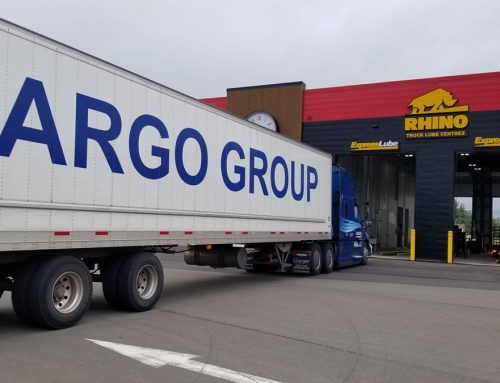
Express truck lube centres are designed around a specific goal: completing routine maintenance efficiently so commercial vehicles can return to work.
Rather than routing every truck through a general repair shop, a drive-through model can streamline eligible services with a workflow built for commercial vehicles.
Potential advantages include:
- Purpose-built service bays designed for commercial trucks and fleet maintenance needs.
- More efficient vehicle flow that reduces unnecessary movement around the facility.
- Coordinated technician workflows that allow suitable tasks to be completed in parallel.
- Predictable routine maintenance that makes it easier to plan service around dispatch schedules.
- Consistent service records that support maintenance tracking and fleet reporting.
The benefit isn’t simply a faster oil change. It’s reducing the time between a truck arriving for scheduled maintenance and being ready for its next assignment.
Pit-Bay Ergonomics and Synchronized Multi-Technician Service
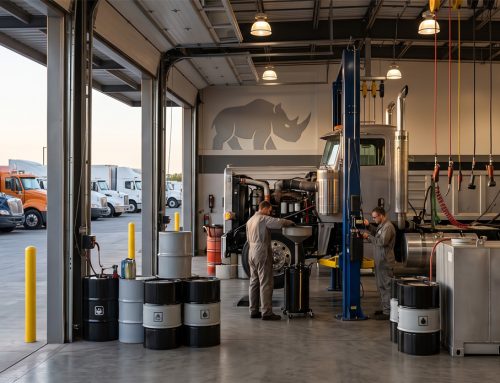
A well-designed pit-bay environment can help technicians access service points efficiently while reducing unnecessary repositioning of the vehicle.
Where the service and facility layout allow, multiple technicians can coordinate different parts of a routine maintenance visit at the same time. One technician may handle lubrication tasks while another performs an inspection or completes other approved service steps.
This synchronized approach can reduce duplicated effort and help create a smoother workflow.
Of course, actual turnaround depends on the truck, the services required, staffing, and any issues discovered during inspection. Express service is designed to make routine work more efficient—not to rush important maintenance or bypass necessary checks.
Financial Math: Calculating Dwell-Time Loss vs. Express Turnaround Savings
To understand the value of reducing dwell time, start by estimating what each hour off the road costs your operation.
Industry estimates sometimes place commercial truck downtime costs in the range of $100 to $150 per hour in lost revenue, but this is not a universal rate. Actual costs depend on the truck’s work, utilization, revenue model, and whether a delayed trip can be recovered. Driver standby pay, penalties, and overhead may add to the total.
Use your own fleet data whenever possible.
Formula: Total Dwell Loss
Total Dwell Loss = (Hours in Shop × Lost Revenue per Hour) + Driver Standby Pay + Fixed Overhead Rate
Here, fixed overhead rate means the portion of fixed operating costs allocated to the downtime period. Use consistent time units and avoid counting the same cost twice.
For example, imagine a truck is unavailable for four hours and your estimated lost revenue is $125 per hour. If the driver’s standby pay and allocated overhead add another $150, the estimated total dwell loss is:
- Lost revenue: 4 hours × $125 = $500
- Driver standby pay and allocated overhead: $150
- Estimated total dwell loss: $650
Now imagine an express maintenance option reduces the time out of service by two hours. At the same estimated lost-revenue rate, that could preserve up to $250 in revenue opportunity, plus any additional savings from reduced standby time or overhead—assuming the recovered hours can actually be used productively.
This is an illustration, not a guaranteed saving. The real benefit depends on dispatch demand, service pricing, the truck’s schedule, and whether the time saved translates into additional productive work.
To make the comparison meaningful, track the opportunity cost per hour alongside service fees. A lower-priced service appointment may not be the least expensive option if it keeps a truck unavailable for significantly longer.
Streamlining Fleet Maintenance: How Rhino Delivers Rapid, Audit-Ready Service
For fleets operating across Atlantic Canada, maintenance planning needs to account for tight schedules, changing freight demands, and the cost of equipment sitting idle.
Rhino Truck Lube Centres provides a dedicated option for routine commercial truck maintenance, helping fleet operators make preventive service part of their operating plan rather than an avoidable disruption.
Explore Rhino’s fleet services to learn more about maintenance options for commercial vehicles. You can also read about the Rhino One-Hour Promise and dealership turnaround times and discover how preventive maintenance can help keep equipment operating reliably.
Maintenance records matter, too. Consistent service documentation helps fleet managers monitor completed work, plan upcoming maintenance, and support internal audits and maintenance compliance. Always confirm the records and specific services required for your vehicles and operating obligations.
Routine drive-through maintenance isn’t a replacement for every dealership service. Complex repairs, manufacturer-specific procedures, and work requiring specialized diagnostics still belong with an appropriately equipped provider. The goal is to send each job to the right place.
Frequently Asked Questions
Keep Your Fleet Moving
Reducing dwell time starts with matching routine maintenance to a service model built for efficiency. By planning preventive maintenance, monitoring turnaround, and measuring the true cost of downtime, fleet managers can make more informed decisions about where their trucks are serviced.
Don’t let your fleet get stuck in multi-day service queues. Partner with Rhino Truck Lube Centres to keep your trucks rolling and generating revenue.