Mobile Fleet Service vs. Drive-Through Express Truck Lube Centres: Cost and Efficiency Comparison
When you’re responsible for keeping a commercial fleet moving, an oil change is never just an oil change.
It’s a truck that isn’t hauling a load.
It’s a driver who isn’t on the road.
It’s a dispatcher trying to rearrange a schedule.
And it’s another maintenance task that needs to be completed without creating a bigger operational headache.
That’s why fleet managers often find themselves weighing two very different approaches: mobile fleet truck oil change vs express lube centre.
Mobile service sounds convenient. The technician comes to you, so your trucks don’t have to leave the yard.
A drive-through truck lube centre sounds efficient. Your driver pulls in, the work gets done, inspections can happen while the truck is in the bay, and the vehicle gets back on the road.
So which is better?
The answer depends on your operation. But for fleets that spend their days moving freight across the Maritimes, the choice often comes down to one question:
Are you optimizing for the convenience of servicing a truck where it sits, or the speed and depth of servicing a truck that needs to keep moving?
The Operational Crossroads of Commercial Fleet Lubrication Management
Fleet maintenance is really an uptime equation.
The goal isn’t simply to find the cheapest oil change. It’s to minimize the total cost of keeping an asset available, safe, documented, and ready to work.
That means looking beyond the invoice.
Consider the true cost of a maintenance visit:
Total service cost = maintenance price + driver time + vehicle downtime + travel + administrative overhead + environmental costs + opportunity cost.
That changes the conversation.
A mobile provider may charge a premium for coming to your yard. But if the truck is already parked and the driver isn’t waiting, that premium may be perfectly reasonable.
On the other hand, if a truck is actively running a route and your driver has to leave the highway, drive to a mobile appointment, wait for a technician, or sit through an extended service process, the economics can quickly shift.
This is where fleet managers need to consider driver wait-time costs.
If a driver costs your operation $X per hour in wages, benefits, and lost productivity—and the truck represents another $Y per hour in lost revenue or utilization—then every hour spent waiting has a measurable operational cost.
The cheapest service invoice isn’t necessarily the cheapest maintenance strategy.
Analyzing the Mobile On-Site Fleet Truck Lube Model
Mobile fleet lubrication has an obvious appeal.
The truck stays where it is. The technician comes to the yard. There’s no need to send a driver across town or take a vehicle out of service for a separate trip to a shop.
For certain fleets, that’s exactly the right solution.
Pros: Off-Hour Servicing and Yard Convenience
Mobile service can be particularly effective when vehicles spend predictable periods parked in one location.
Think of:
- Construction fleets that sit overnight.
- Municipal or utility vehicles parked at a central depot.
- Seasonal equipment.
- Trailers and assets that aren’t constantly moving.
- Fleets with dedicated maintenance yards.
In these situations, mobile service can happen during off-hours, potentially allowing a truck to be ready when the next shift begins.
The biggest advantage is simple:
The asset doesn’t have to travel to the service provider.
For a fleet with dozens of vehicles parked in one location, that can eliminate a surprising amount of unnecessary movement.
Mobile servicing can also make sense when maintenance is scheduled around the fleet’s operating pattern rather than the service centre’s hours.
Cons: Severe Weather Disruption and Environmental Spillage Realities
But there’s another side to mobile service, particularly in Atlantic Canada.
Weather matters.
Working outside in heavy rain, snow, freezing temperatures, or high winds isn’t just inconvenient. It can affect productivity, technician safety, and the consistency of the service environment.
Then there’s the question of environmental control.
Oil changes and lubrication services involve fluids that need to be handled and disposed of correctly. A controlled service bay provides a very different environment from an open parking lot.
Fleet managers should ask how a mobile provider manages environmental oil disposal surcharge costs and fluid handling.
They should also consider onsite contamination liabilities.
What happens if a spill occurs on a paved yard? Who is responsible for cleanup? How are used fluids collected? What documentation is provided for disposal?
These may not be the questions you think about when booking an oil change—but they become important when you’re managing a large commercial operation.
Mobile service also has limitations when the job becomes more than lubrication.
If a technician discovers a worn component, a fluid leak, or another maintenance concern, the next step may require another appointment—or another trip to a shop.
That’s where the service model starts to matter.
Analyzing the Express Drive-Through Truck Lube Model: The Rhino Framework
At Rhino Truck Lube Centre, the drive-through model is built around a different idea.
Bring the truck to the service environment, get the work done efficiently, inspect the asset while it’s there, and get it back on the road.
For an active over-the-road fleet, that can be a significant advantage.
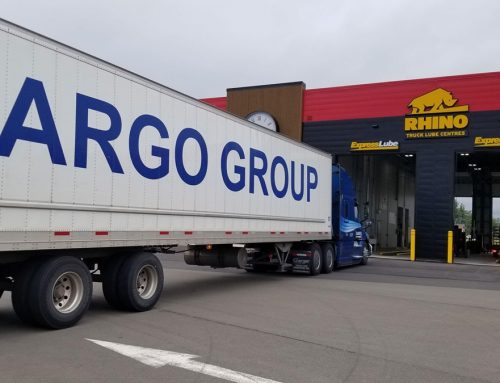
The truck is already moving through the transportation network. Instead of scheduling a technician to travel to the truck, the driver can incorporate preventative maintenance into the vehicle’s route.
That is a fundamentally different model.
And it can work particularly well for fleets operating through established freight corridors in the Maritime provinces.
The Efficiency Yield of Pit Bays and High-Flow Commercial Equipment
The physical service environment matters.
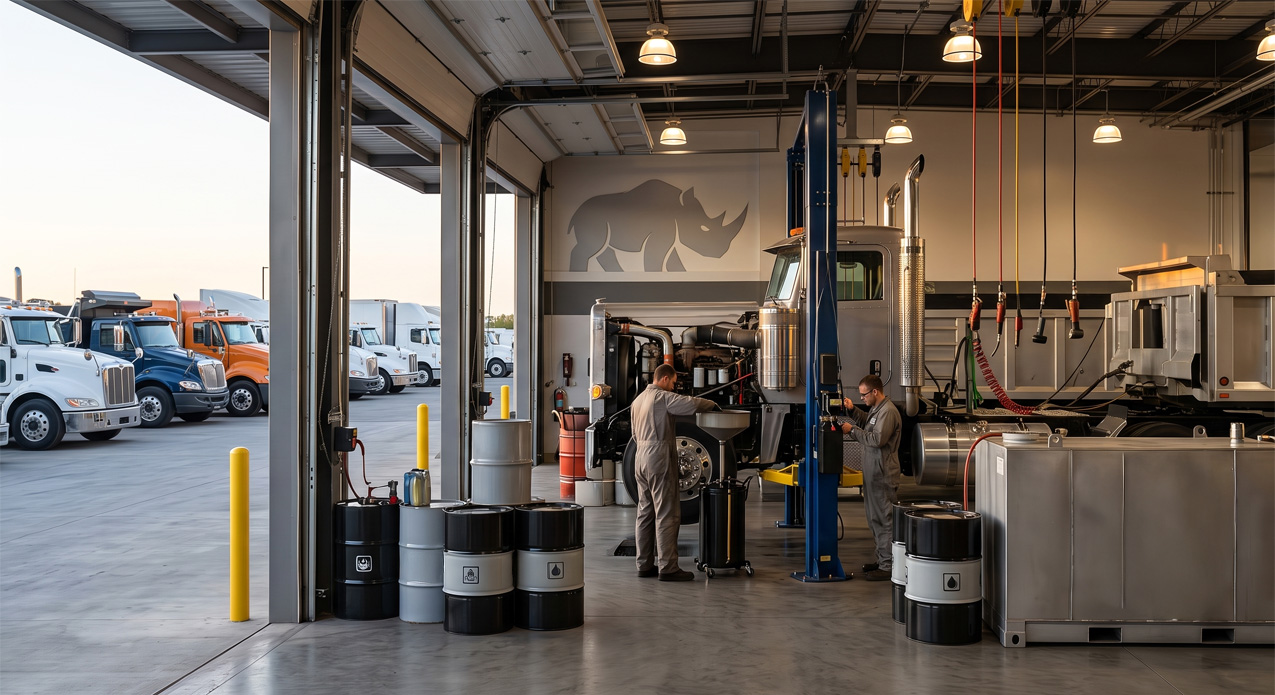
A specialized commercial truck lube facility is designed around the size, weight, and maintenance requirements of heavy vehicles.
A drive-through pit allows technicians to access the underside of the truck efficiently. High-flow commercial equipment is designed for larger lubricant volumes. The service process can be standardized, repeatable, and organized around commercial fleet needs.
That’s where bay turnaround efficiency becomes important.
The goal isn’t simply to get the oil changed quickly.
It’s to minimize the amount of time the asset spends out of service while still completing the work properly.
A dedicated service environment can also support more consistent bulk lubricant tracking and documentation. For fleet managers, that means better visibility into what was serviced, what products were used, and when the work was completed.
The result is a maintenance process that can be easier to integrate into a broader preventative maintenance program.
Hidden Math: Driver Layover Labour Costs vs. On-Site Mobilization Surcharges
Here’s where the decision gets interesting.
Let’s say a mobile provider charges a premium to bring the service to your yard.
At first glance, the mobile option may look more expensive.
But now consider the alternative.
If a truck has to leave its route to visit a service centre, how long is the driver away from productive work?
A simple fleet calculation looks like this:
Drive-through service cost = service price + travel time + driver labour + lost utilization.
Mobile service cost = service price + mobilization fee + scheduling constraints + potential weather/environmental costs.
The right answer depends entirely on the operation.
If 20 trucks are parked at the same yard overnight, mobile servicing may eliminate unnecessary vehicle movement.
If 20 trucks are travelling through the Maritimes every day, sending a technician to each truck may be less efficient than having drivers incorporate preventative maintenance into their routes.
That’s the choice framework fleet managers should keep in mind:
Mobile service fits static weekend assets and concentrated fleets. Express drive-through service fits active over-the-road freight operations moving through established transportation corridors.
The best maintenance strategy isn’t necessarily the one with the lowest service invoice.
It’s the one that produces the lowest total cost per available truck hour.
Diagnostic Advantage: Pit Inspection Capabilities vs. Ground-Level Inspections
There’s another difference that shouldn’t be overlooked.
A lubrication service is an opportunity to look at the truck.
A technician working in a dedicated pit has access to areas that may be difficult to see during a ground-level mobile service.
That can provide greater preventative inspection depth.
Depending on the service being performed, technicians may be able to identify developing issues involving components underneath the vehicle, leaks, or other maintenance concerns before they become bigger problems.
That doesn’t mean a mobile technician can’t perform a quality inspection.
It means the service environment itself can affect what is visible and accessible.
For fleet managers, that distinction can matter.
A good preventative maintenance program isn’t just about changing fluids on schedule. It’s about identifying potential problems early, documenting what was found, and creating a record that supports better maintenance decisions.
That documentation can also be valuable when fleets need to demonstrate maintenance practices during regulatory or safety audits.
For that reason, fleet managers should ask service providers what documentation they provide, how inspection findings are recorded, and whether service records can be integrated into their fleet maintenance systems.
So, Which Fleet Service Model Makes Sense?
There isn’t one universal answer.
Mobile service can be an excellent choice for assets that spend long periods parked in one location. If your fleet is concentrated at a yard and your priority is minimizing vehicle movement, having the technician come to you may make perfect sense.
But if your fleet is actively hauling freight across the Maritime provinces, the economics may favour a specialized drive-through truck lube centre.
The truck is already on the road.
The driver is already working.
The maintenance needs to happen anyway.
Why not build that maintenance stop into the route and take advantage of a purpose-built commercial service environment?
For active fleets, the combination of bay turnaround efficiency, pit access, preventative inspection depth, and service documentation can make the drive-through model a powerful tool for maximizing uptime.
The real question isn’t simply:
“Where can I get the cheapest oil change?”
It’s:
“Which service model keeps my trucks productive while giving me the maintenance visibility I need to manage the fleet properly?”
That’s a much better question.
And for many commercial fleets, the answer starts with looking at the total cost of downtime—not just the price on the service invoice.
Frequently Asked Questions
Maximize your asset uptime without compromising on inspection quality. Contact our fleet accounts department to customize your preventative maintenance pipeline.